We are pleased to announce the launch of the official website of Jiangsu Angkua Environmental Protection Technology Co., Ltd. Here you can find our latest product information, service introductions, industry trends and company news.
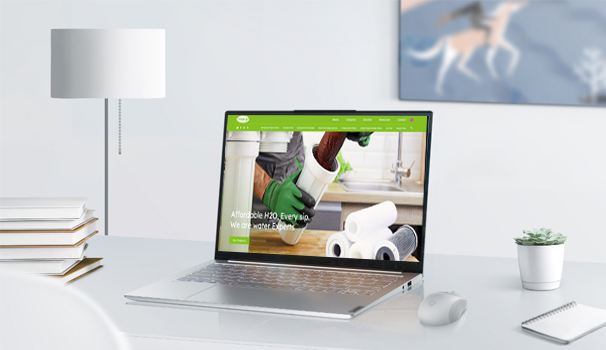
I. Core Working Principle: Multi-Stage Filtration ProcessMost household water purifiers follow the following basic process, with each filter stage responsible for treating different types of contaminants:Pre-filtration (coarse filtration)Filter Type: Typically a PP cotton filter.Working Principle: Like a very fine sieve, it primarily uses physical interception.Removes: Large particles of impurities in the water, such as silt, rust, insect eggs, and suspended solids.Purpose: Protects subsequent, more sophisticated filters and extends their lifespan. This is the "first line of defense" for water purification. Adsorption Filtration (Removes Residual Chlorine and Organic Matter)Filter Type: Typically an activated carbon filter (granular activated carbon (GAC) or compressed activated carbon (CTO)).Working Principle: Activated carbon utilizes its large surface area and porous structure to attract odors and discolorations in the water through physical adsorption, acting like a magnet. Simultaneously, it chemically reacts with residual chlorine, removing it. Removes: Residual chlorine, discoloration, odor (such as bleach), some organic matter (such as pesticide residue), and some volatile substances. Purpose: Improves the taste and odor of water and protects the subsequent reverse osmosis membrane (if present) from oxidative damage caused by chlorine. Core Filtration (Key Technology)This is the most crucial step in determining the type of water purifier and its purification effectiveness. There are three main technologies:Reverse Osmosis (RO) TechnologyHow it works: A high-pressure water pump forces water molecules through the RO membrane, which has a pore size of just 0.0001 microns. This pore size is only one millionth the size of a human hair, making it impervious to even viruses and metal ions. These trapped impurities are then discharged with the wastewater.Removes: Almost all impurities, including heavy metals (lead, mercury, arsenic), bacteria, viruses, scale (calcium and magnesium ions), antibiotics, and inorganic salts. The result is near-pure "pure water." Ultrafiltration (UF) TechnologyWorking Principle: This is also a membrane filtration method, but the pore size (approximately 0.01 micron) is much larger than that of RO membranes. Under normal tap water pressure, water and small molecules (such as minerals) can pass through, while large molecules are retained.Removed Substances: Bacteria, colloids, rust, large organic molecules, etc.
Health Benefits: The Core Benefit Removes Harmful Contaminants, Ensuring Drinking Water Safety Bacteria and Viruses: Ultrafiltration (UF) and Reverse Osmosis (RO) technologies can effectively remove bacteria and viruses such as E. coli and norovirus. Heavy Metals: Lead, mercury, cadmium, and arsenic are extremely harmful to children's neurological development and adult health, and reverse osmosis technology can effectively remove them. Residual Chlorine and Its Byproducts: Chlorine is used for disinfection in water plants, leaving residual chlorine in the water. Chloroform produced during water boiling is a potential carcinogen. Activated carbon filters effectively absorb residual chlorine. Organic Contaminants: These include pesticide residues, antibiotics, and industrial organic solvents. II. Improved Quality of Life: The Most Intuitive Experience Improves the Taste and Odor of Water Removing impurities such as residual chlorine and organic matter makes water taste sweeter and fresher, without the "bleaching powder" taste. This encourages families to drink more water, especially for children who may be reluctant to drink water. Improve food quality.Brewing tea/coffee: Using purified water can better bring out the original aroma of tea leaves and coffee beans, resulting in a clearer tea and a richer coffee.Cooking rice/soup: Using purified water for rice makes rice more fragrant and plump, while for soup, it preserves the original flavor of the ingredients and creates a clearer soup. III. Economic and Environmental Benefits: More cost-effective in the long runCost savings Although a water purifier has an initial purchase cost, in the long run, it is much cheaper than buying bottled water. A barrel of high-quality bottled water (approximately 18.9 liters) costs between 15 and 30 yuan, which can cost a family thousands of yuan per year. The average daily cost of a water purifier is typically only a few cents to one or two yuan.Protecting appliances and extending their lifespans: Using softened purified water (or descaled pure water) can significantly reduce the accumulation of scale on the inside of appliances.

CONTACT us
*Your email is safe with us, we don't spam.

 The company's main products include
 Contact Info
Phone: +86-13962755959 Tel: +86-513-87206118 E-mail: AK@chinnovel.com Add: 555 Yishou North Road, Chengbei Street, Nantong, Jiangsu