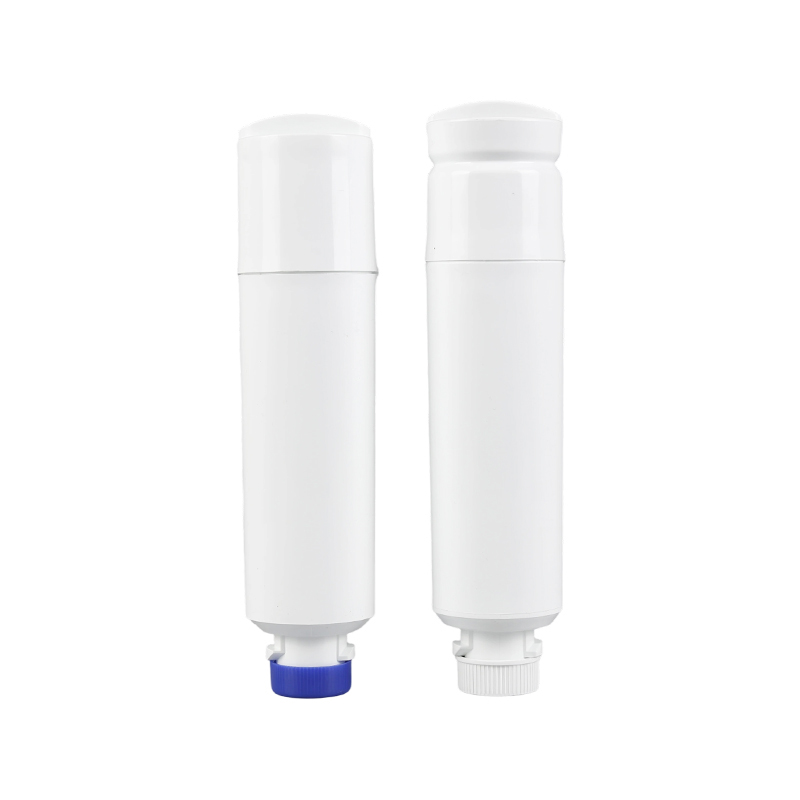
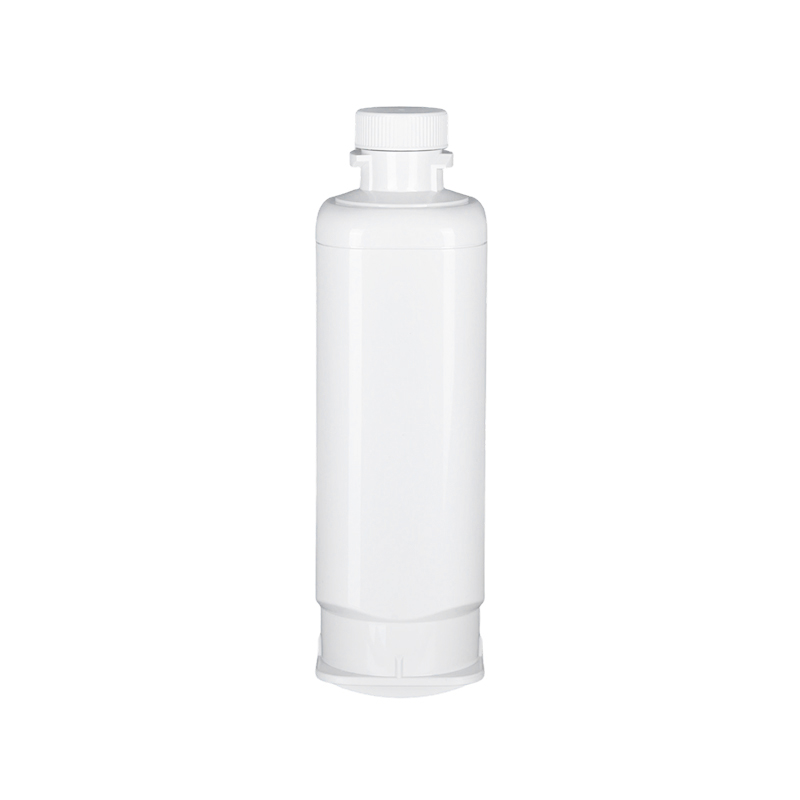
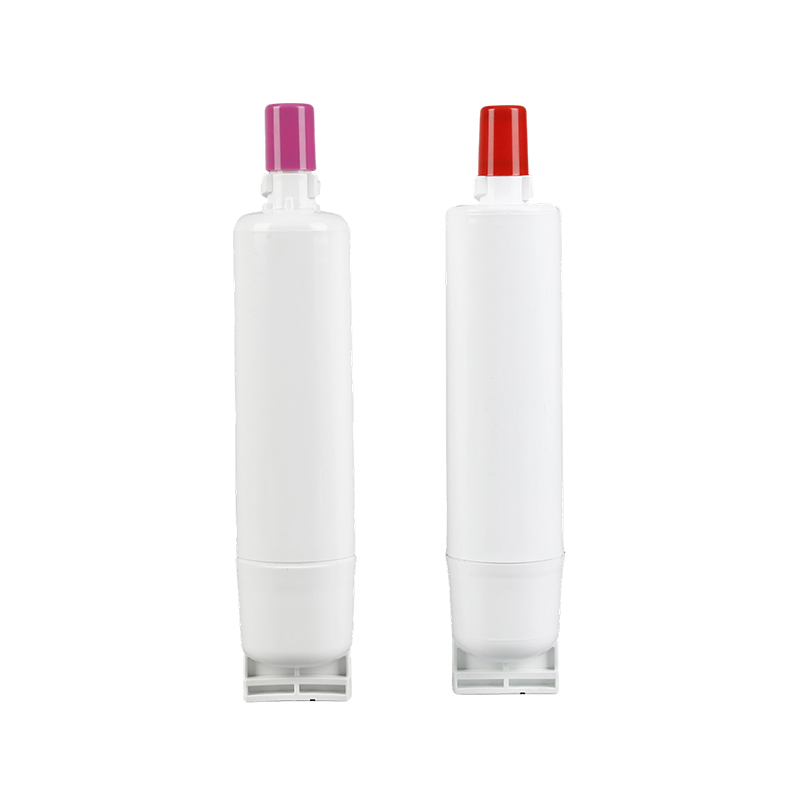
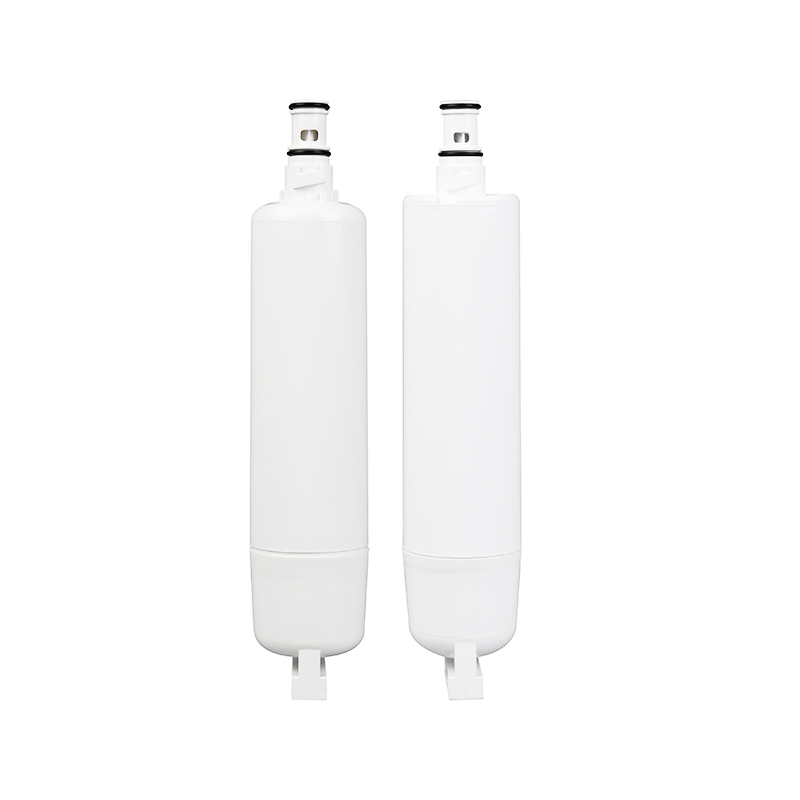
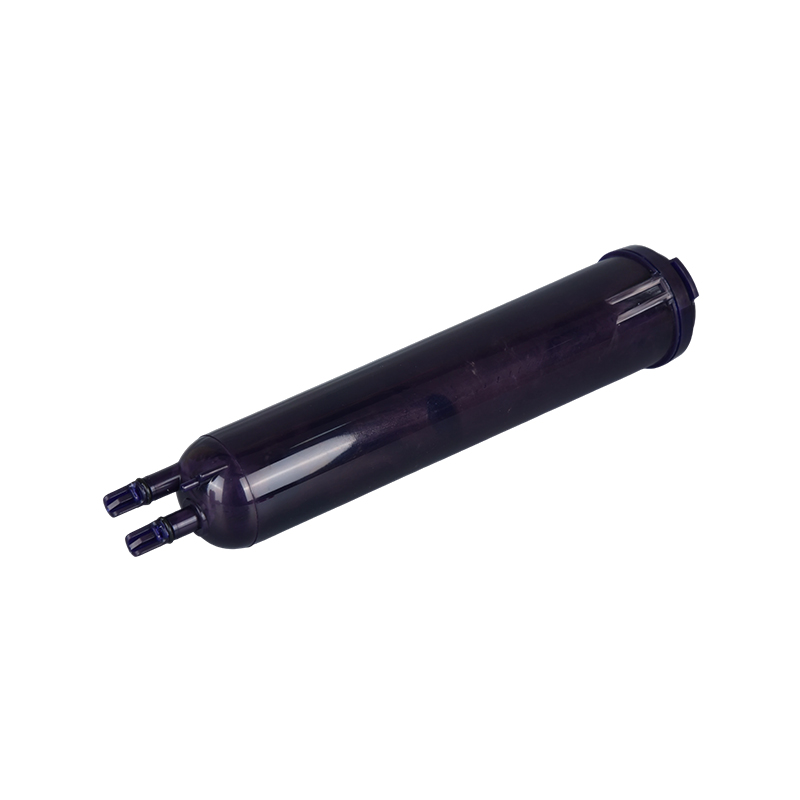
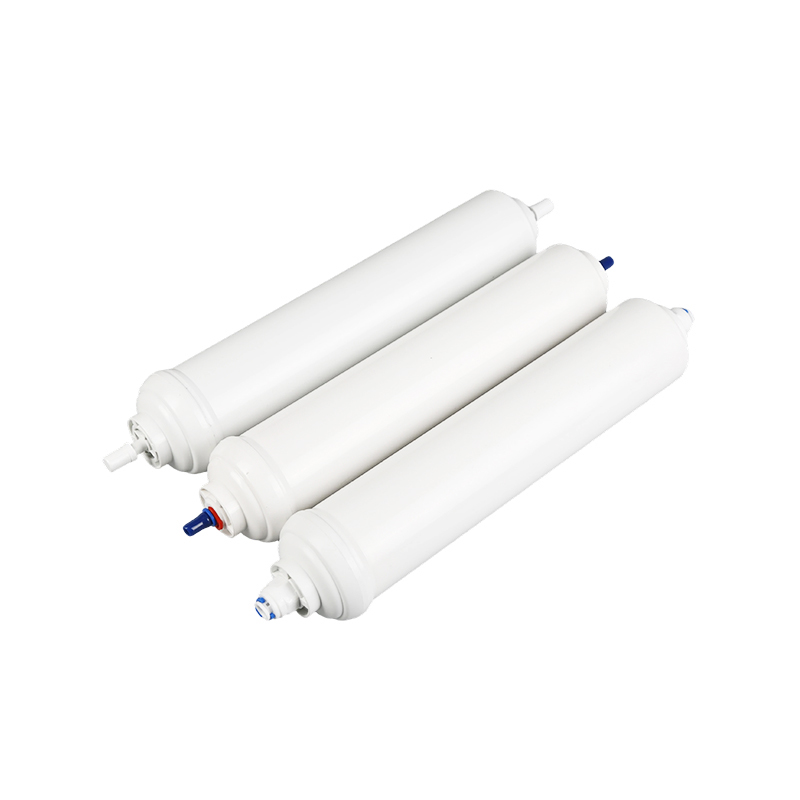
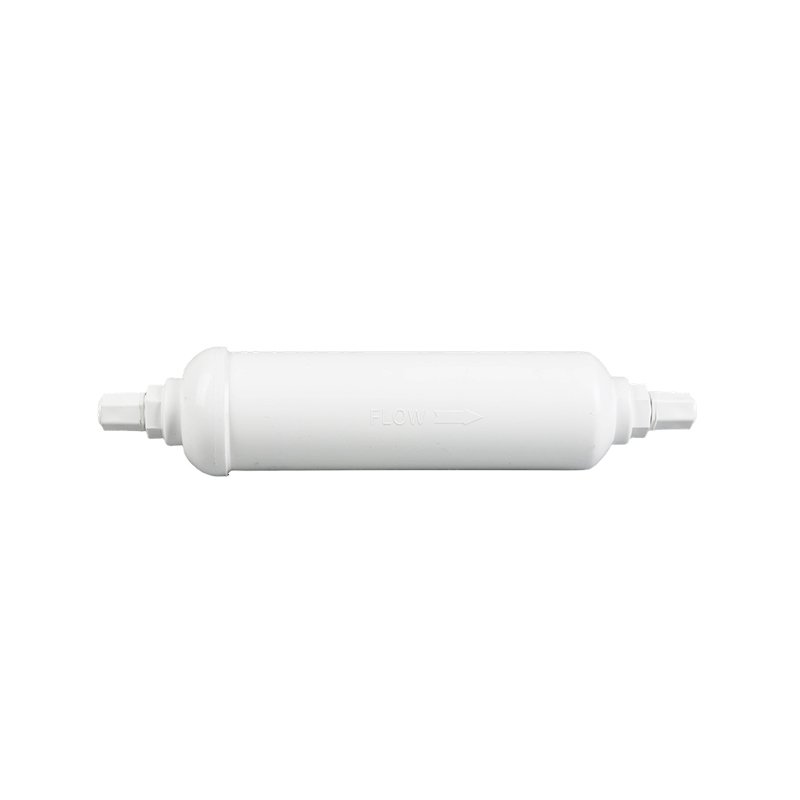
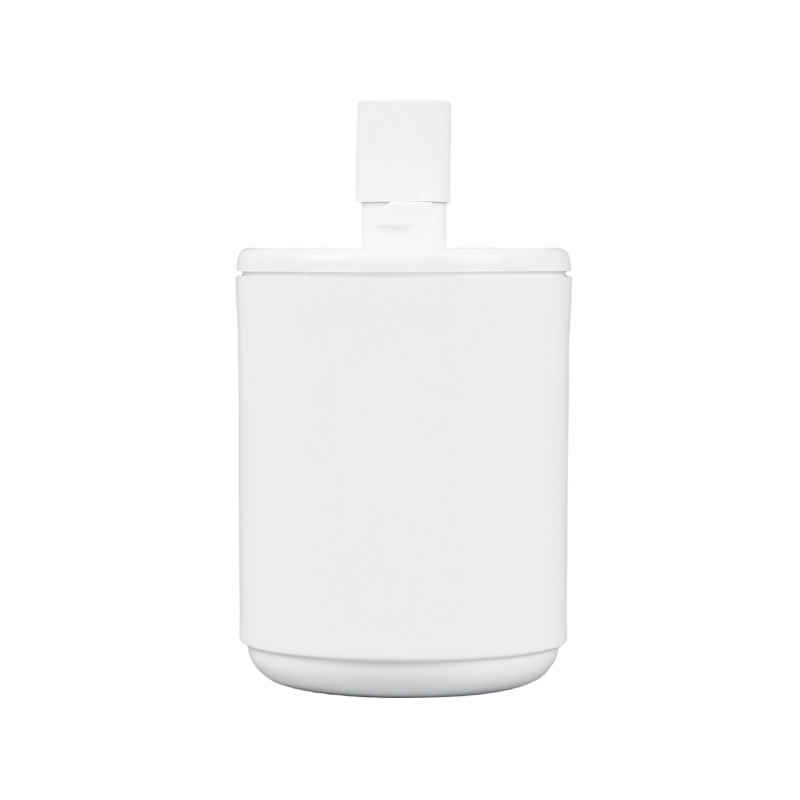
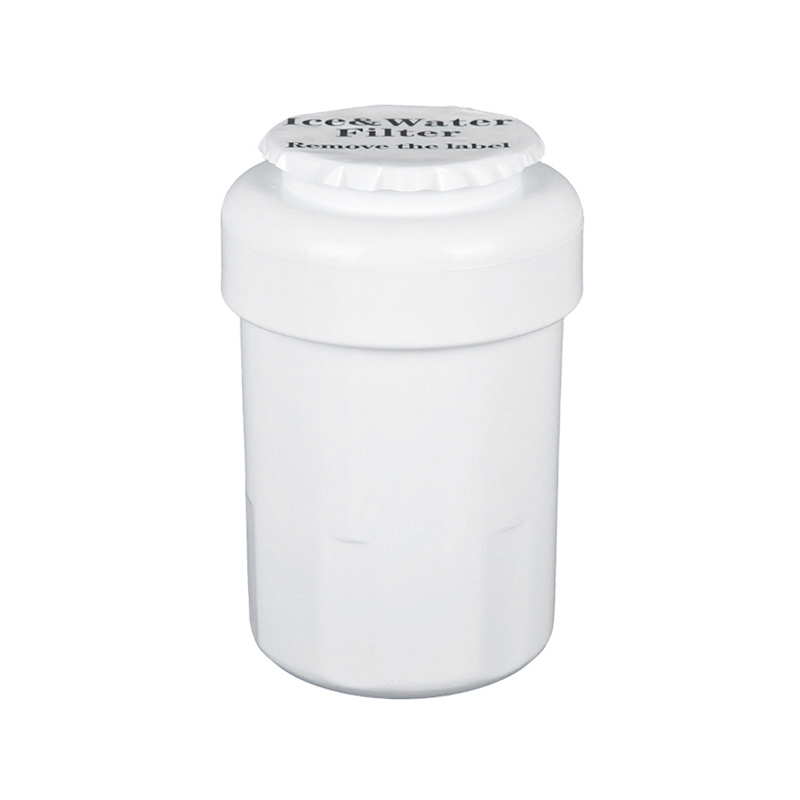
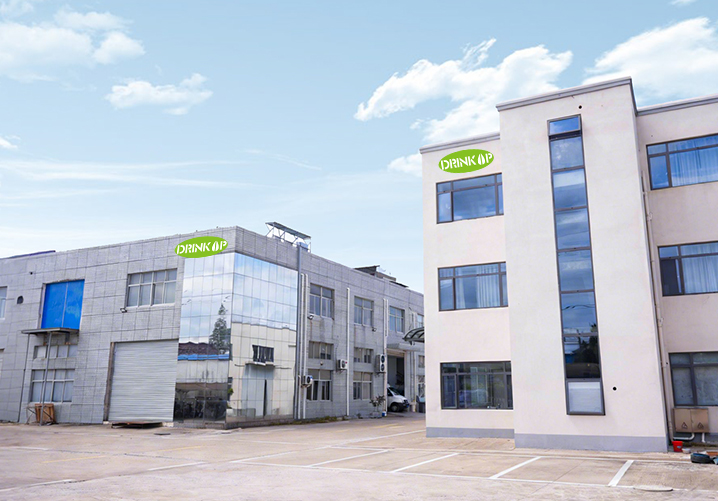
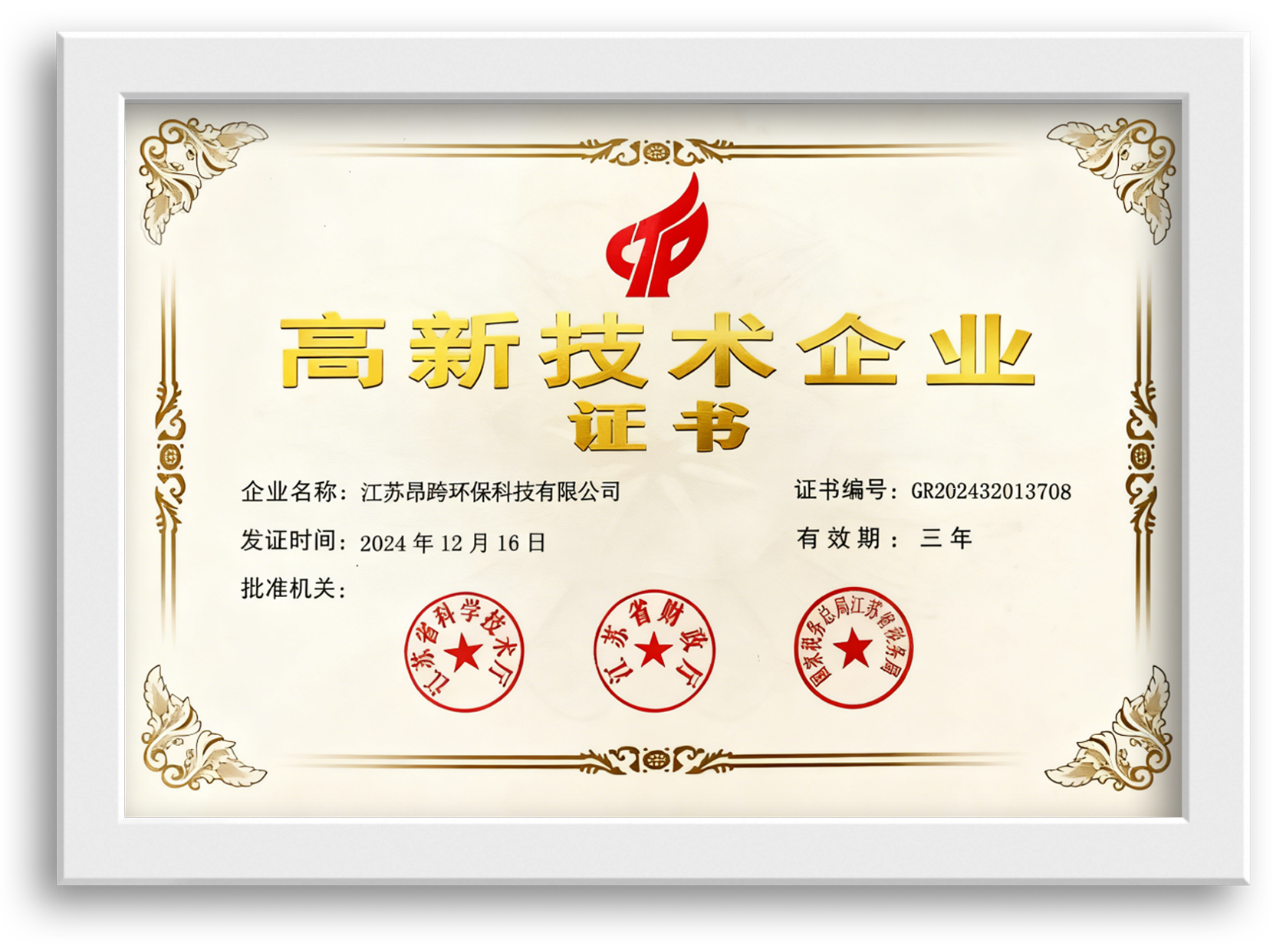
Jiangsu Angkua Environmental Protection Technology Co., Ltd. is a water purification equipment manufacturer based in Nantong, Jiangsu, producing household water purifiers, purification components and refrigerator cartridges. As a Refrigerator Water Filters manufacturer, we cover 48 RF-series models built to replace the cartridges used in Samsung, LG, Whirlpool, GE and Fisher & Paykel refrigeration water systems. Appliance brands, filter distributors and private-label programmes in Europe, North America and other export markets take these cartridges from us for interface fit, flow consistency and stable bulk supply.
The RF Range: Cartridges Matched to Refrigerator Water Systems
Every cartridge carries an RF model number mapped to the OEM filter reference it replaces. Model coverage opens the discussion; the working point — dispenser flow demand, inlet pressure, influent chemistry and replacement interval — decides the media build behind the interface. Flow targets sit between 0.5 and 0.75 GPM for internal cartridges and 0.75 to 1.0 GPM for inline housings.
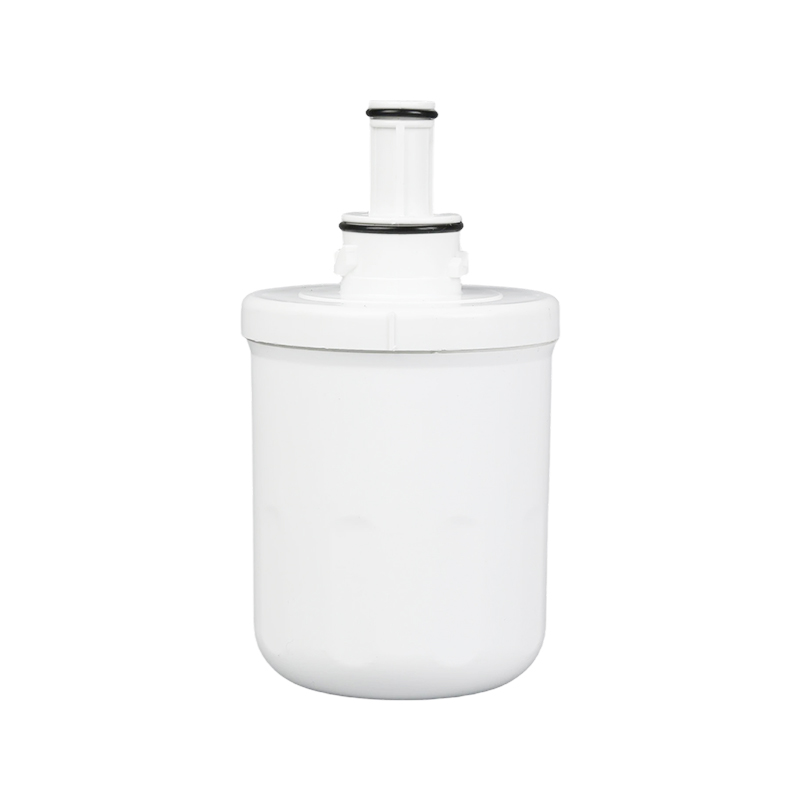
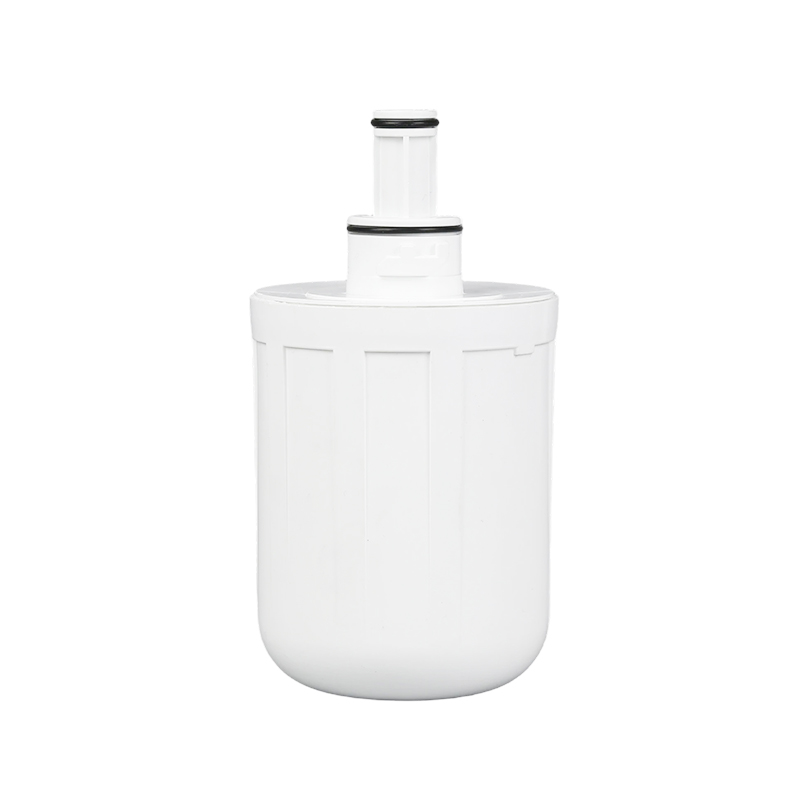
A representative build is the Samsung DA29-00003G Advanced Purification Refrigerator Water Filter, which runs multi-layer media for particulate, odour and residual chlorine reduction on Samsung dispenser lines.
| RF model |
Replacement reference |
Cartridge positioning |
Application fit |
| RF-01 |
Samsung DA29-00003G / DA29-00003F |
Advanced purification, multi-layer media |
Side-by-side and French-door models with an internal cartridge slot |
| RF-02 |
Samsung DA29-00003B |
Premium performance media |
Standard Samsung internal housings |
| RF-03 |
Samsung DA29-00020B |
Long-lasting carbon block |
High-volume replacement programmes |
| RF-03-1 |
DA97-17376B |
Efficient flow |
Refrigerators with high dispense demand |
| RF-04-1 / RF-04-2 |
Whirlpool 4396508 / EDR5RXD1 Filter 5 |
Ultimate clean and premium filtration variants |
Whirlpool and KitchenAid style internal housings |
| RF-05 |
Whirlpool 4396841 |
High-end purification |
Whirlpool side-by-side refrigerators |
| RF-06 |
Samsung DA29-10105J |
High capacity |
Longer replacement intervals |
| RF-07 |
LG 5231JA2010A |
Efficient flow |
LG dispenser lines |
| RF-08 |
LG LT500P |
Long-lasting |
LG French-door refrigerators |
| RF-09 |
GE MWF |
Professional-grade filtration |
GE and GE Profile models |
| RF-25 |
Fisher & Paykel 836848 |
Original-style fit and finish |
Fisher & Paykel refrigerators |
Filtration Media: Carbon Block versus Granular Carbon
Inside the cartridge, media form sets the limit of purification. Our refrigerator cartridges are built on sintered coconut-shell carbon block, where high-temperature bonding produces a dense microporous structure with stable flow channels and low fines release. The practical differences against loose granular activated carbon are the ones that appear in field returns.
| Performance indicator |
Carbon block |
Granular activated carbon (GAC) |
Engineering impact |
| Physical structure |
Solid, dense microporous network |
Loose granule bed |
Uniformity of water flow channels |
| Micron rating |
Down to 0.5 micron in precision builds |
Typically 20–50 micron |
Interception of fine solids and cysts |
| Contact time |
Longer and evenly distributed |
Short-circuit paths possible |
Chlorine and chemical adsorption efficiency |
| Carbon fines release |
Low, structurally bound |
Higher under flow impact |
First-flush water and ice clarity |
| Pressure fluctuation |
Strong resistance to water hammer |
Weaker retention |
Service life in high-pressure networks |
Housings use high-strength, BPA-free food-grade polymer, dimensioned for continuous hydrostatic service at working pressures up to 120 psi and ultrasonically welded at the seal. Material selection here is a safety decision, not a cost decision: a degraded housing releases into drinking water or fails under pressure.
Push-In and Twist-On Interface Formats
- Push-in: straight-line insertion against a precision O-ring with an internal lock and audible click. The format simplifies replacement but demands tight mould tolerance; a small dimensional deviation shows up as a seal leak rather than an obvious defect.
- Twist-on: thread or bayonet locking through a quarter to half turn, giving stronger physical retention when line pressure surges.
- Internal mounting: upper-right corner or bottom grille of the refrigerator compartment, generally 0.5–0.75 GPM, fully enclosed from the kitchen environment.
- Inline mounting: on the supply line behind the refrigerator, larger capacity and 0.75–1.0 GPM, used for older models without a built-in cartridge slot or where high dispense flow is required.
- Mould development: reverse engineering and 3D mould work align teeth, threads and seal grooves with the original housing so the cartridge seats without seating force.
OEM and ODM Configuration Options
Beyond standard models, we build variants around regional water chemistry and brand requirements. Configuration is quoted against the target model list, annual volume and packaging artwork.
- Media formulation for high heavy-metal influent, using ion-exchange resin or a lead-reduction carbon block.
- Scale inhibitor media for hard-water regions to protect refrigerator valves and internal tubing.
- Carbon block density and micron rating matched to the reduction claims printed on the label.
- Private-label printing, custom colour boxes and language-specific manuals.
- New interface moulds where a refrigerator platform falls outside the current RF range.
Quality Control, Testing and Compliance
A sealed, pressure-bearing cartridge is verified by destructive testing, not by inspection paperwork alone. Automatic filling equipment holds carbon block weight inside a tight band, and finished cartridges pass through automatic full-inspection stations on the line.
- Water hammer testing pulses the cartridge between 0 and 150 psi across high cycle counts to verify burst resistance.
- Burst pressure testing drives the housing to several times its normal working pressure to confirm wall strength and ultrasonic weld integrity.
- Air tightness and flow resistance checks on finished units.
- AQL batch sampling of residual chlorine reduction and flow performance to keep delivered units consistent with the qualification sample.
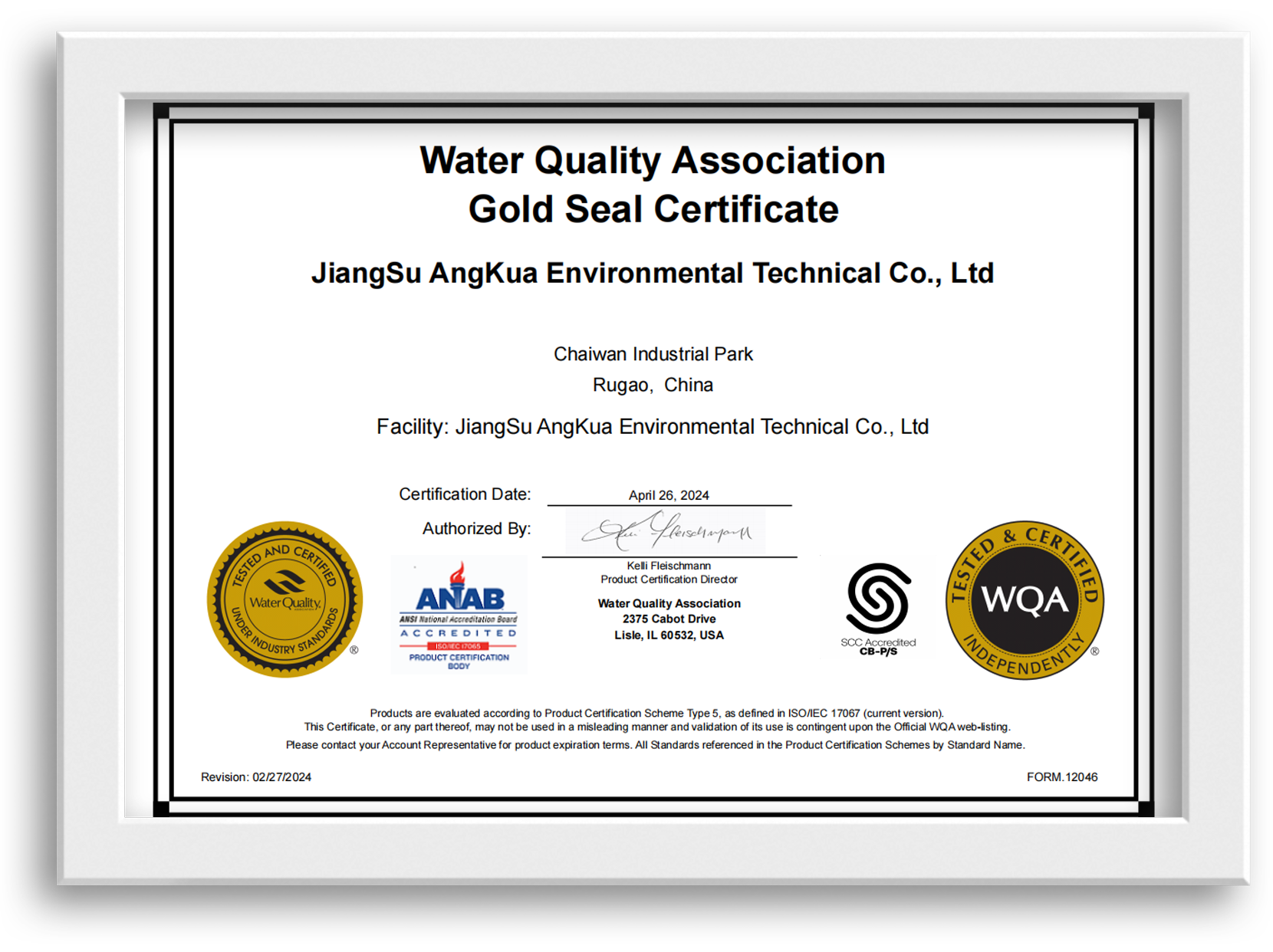
- Factory quality and environmental systems certified to ISO9001 and ISO14001.
- Water purification products certified to NSF/FDA, DIN8077 and DIN8078, and tested against ISO15874 and GB/T18742.
Installation, First Flush and Replacement Cycle
A correct installation is a straight-line or quarter-turn action with no tools, followed by a defined flush. We specify a first flush of roughly two to three gallons to clear residual carbon fines and trapped air before the dispenser or ice maker is used. Product boundaries are stated clearly: these cartridges reduce residual chlorine, odours, particulate and heavy metal particles while retaining calcium and magnesium, so they are not a TDS-reduction device — that function belongs to reverse osmosis.
Replacement is set at six months or the rated gallonage, whichever comes first. Carbon micropores saturate progressively, and a cartridge held in a damp compartment beyond its service window becomes a hygienic risk rather than a filter.
Packaging, Pallet Utilisation and Delivery Scope
Outer carton dimensions and pallet patterns are optimised so container space carries more cartridges per shipment and freight cost per unit stays low. Standard delivery covers the cartridges, labels, colour boxes or bulk cartons, manuals and inspection documentation; private-label packaging is produced to the supplied artwork. Automated filling and spin-welding lines, supported by raw material reserves, keep large-volume releases on schedule.
Information We Use to Configure Your Solution
- Refrigerator brand and model, or the OEM filter reference being replaced.
- Interface format confirmation — push-in or twist-on, keying position, thread and seal groove, supported by a sample cartridge or clear photographs.
- Operating inlet pressure range and required dispenser flow in GPM.
- Influent water data: residual chlorine, hardness, heavy metal levels and TDS.
- Target reduction claims and the certification the destination market requires.
- Annual volume, release schedule and packaging or label artwork.
- Storage and shelf-life expectations, plus any acceptance sampling protocol for incoming inspection.
Other Product Families We Manufacture
Water purification systems and elements — our Water Purification System range covers household purifiers, CTO precision elements and ceramic elements for under-sink and countertop installations.
Composite filter elements — multi-stage Composite Filter Element cartridges combine sediment, carbon and precision layers for compact housings.
Dispenser and specialty cartridges — RF-34, RF-80 and RF-104 water dispenser elements, pet fountain cartridges and other formats sit alongside the refrigerator range and share the same production and inspection lines.
Frequently Asked Questions
Which refrigerators do your cartridges fit?
The RF range covers the main internal platforms from Samsung (DA29-00003G, DA29-00003F, DA29-00003B, DA29-00020B, DA29-10105J, DA97-17376B), Whirlpool (4396508 / EDR5RXD1, 4396841), LG (5231JA2010A, LT500P), GE (MWF) and Fisher & Paykel (836848). Fit is confirmed on the interface itself — teeth, thread, keying and seal groove — rather than on a model name alone.
Why is the replacement interval six months or 300 gallons?
Activated carbon micropores saturate as they adsorb chlorine and organics, and filtration efficiency falls as surface area is consumed. A cartridge left in a damp compartment well beyond that window can also support bacterial growth, so the interval is a hygiene limit as much as a performance limit.
Will a refrigerator water filter lower TDS?
No. These cartridges work by physical interception and adsorption, targeting residual chlorine, off-colours, odours, heavy metal particles and cysts while leaving beneficial calcium and magnesium in the water. Reducing TDS requires reverse osmosis, which is outside the function of a built-in refrigerator cartridge.
How do you keep filtration performance consistent across a bulk order?
Automatic filling controls carbon block weight within a narrow tolerance, and the line applies AQL batch sampling to flow resistance, residual chlorine reduction and air tightness. Delivered cartridges therefore track the performance of the approved sample rather than drifting between production runs.
Why does a new cartridge need flushing?
Cutting the carbon block and moving it through transit releases a small amount of harmless carbon fines, and air remains trapped in the housing. Discharging two to three gallons clears both, so subsequent ice is clear and dispensed water has no carbon taste.
Can the cartridges be produced under our own brand?
Yes. We produce private-label and OEM/ODM programmes with custom media formulation, printed labels, colour boxes and manuals. Sharing the target model list, annual volume and artwork is enough for us to return a configuration and quotation.


 Español
 عربى
عربى русский