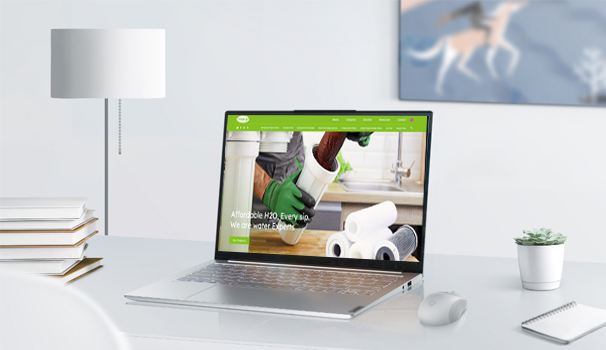
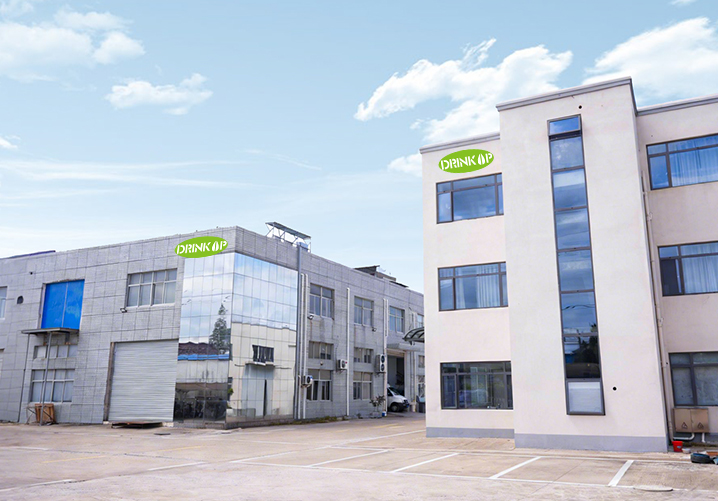
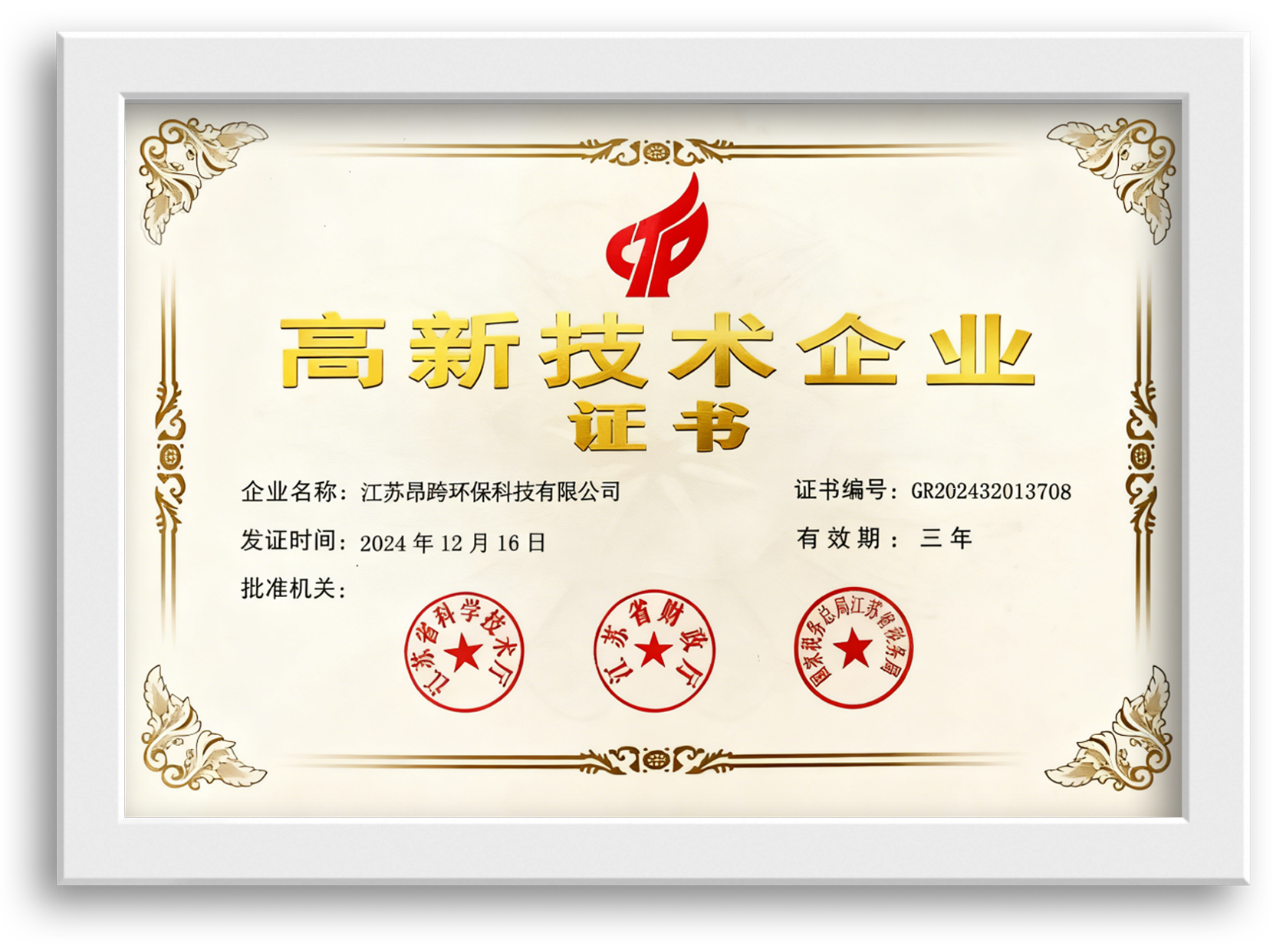
Jiangsu Angkua Environmental Protection Technology Co., Ltd. is a water purification equipment manufacturer based in Nantong, Jiangsu, China. We research, develop and produce filtration cartridges, composite filter elements, household and whole-house purifier units, air and faucet filters, pool and spa cartridges, and the PPR pipe and fittings that complete a purified water distribution network.
Our Wholesale Water Purification Equipment catalogue supplies appliance replacement programmes, filtration distributors, water treatment integrators and private-label brands, with products already shipped into European and United States markets. Orders move from a defined working point — appliance model, feed water, cartridge envelope and annual volume — into a configured product and a controlled production run.
Our Position in the Water Purification Equipment Category
We manufacture at both cartridge level and complete-unit level, which keeps media specification, housing geometry and finished-product performance under one roof. Our technical team handles sample evaluation, dimensional drawing approval and pre-production samples, while automated production lines and reserved raw material stock hold the same media grade, seal and fit across repeat orders.
- Component supply: replacement cartridges and filter elements for appliances already in the field.
- Private-label supply: our products under distributor or brand packaging, including printed cartons and housings.
- System supply: purifier units with housing, bracket, fittings and PPR pipework for installation projects.
- Export documentation: commercial documents, dimensional drawings and test records issued against the confirmed specification.
Product Range We Supply
Each family below is produced in-house and passes the same incoming-material and finished-goods control, so a mixed container can be planned as a single shipment.
| Product family |
Formats we produce |
Application fit |
Typical selection inputs |
| Refrigerator water filters |
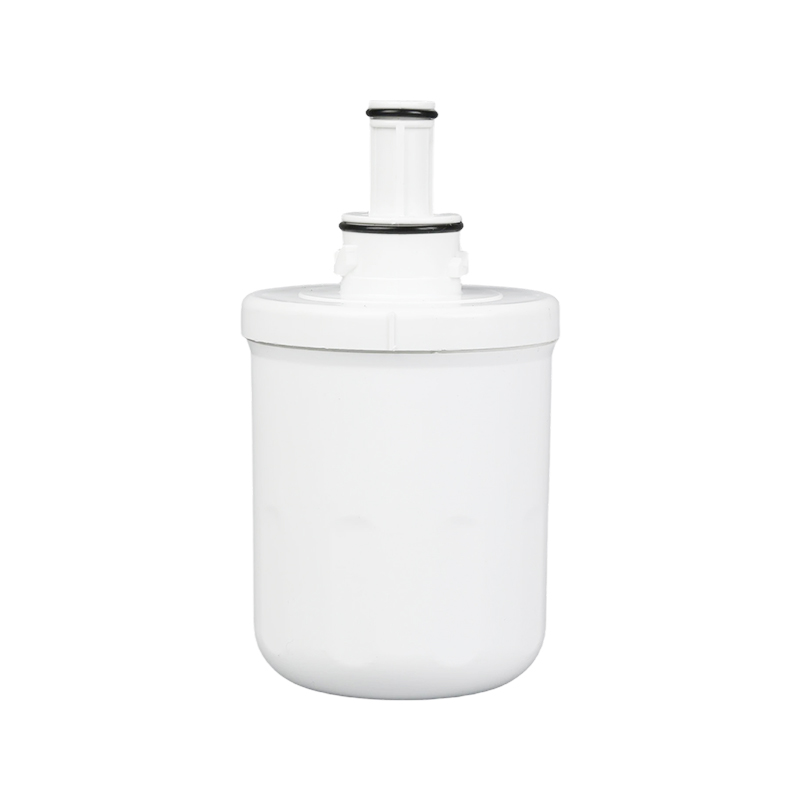
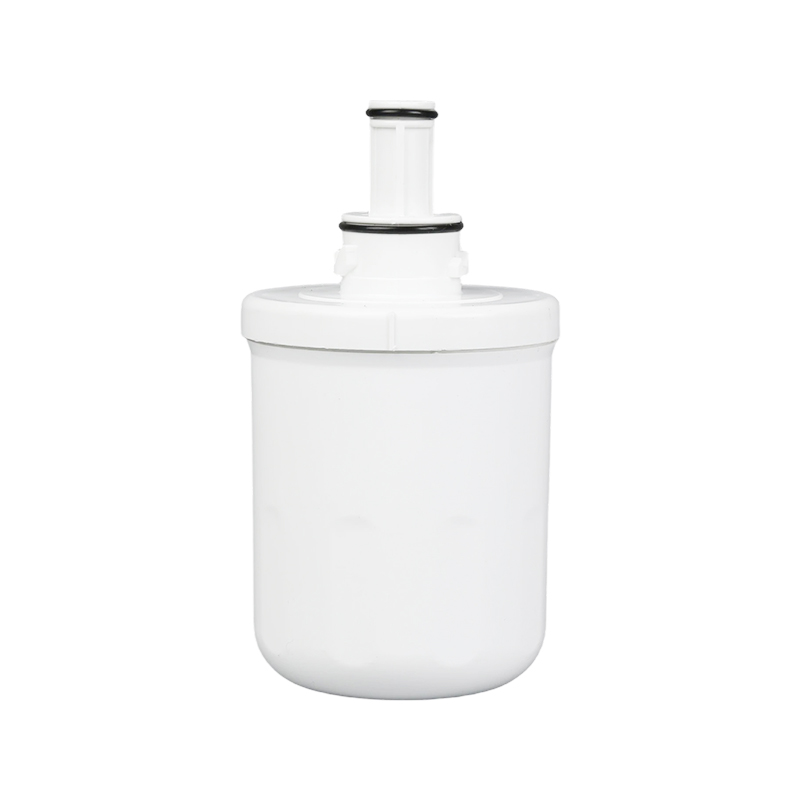
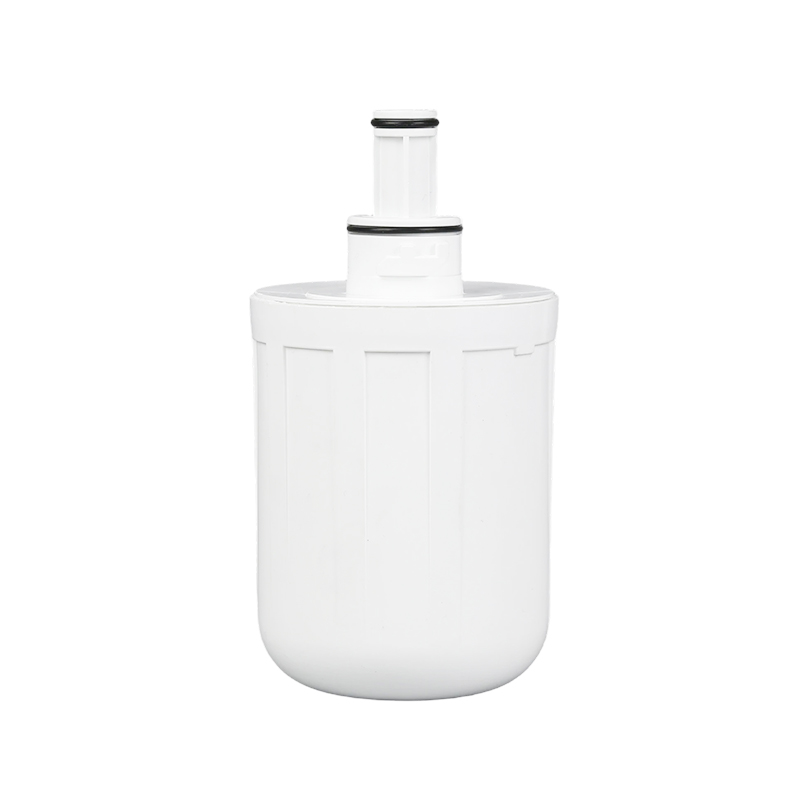
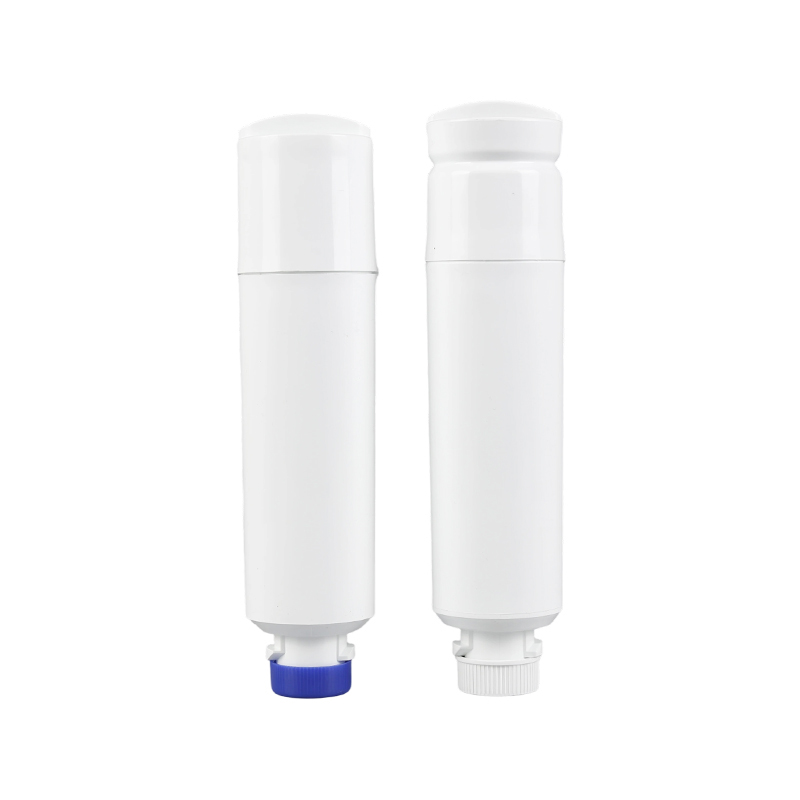
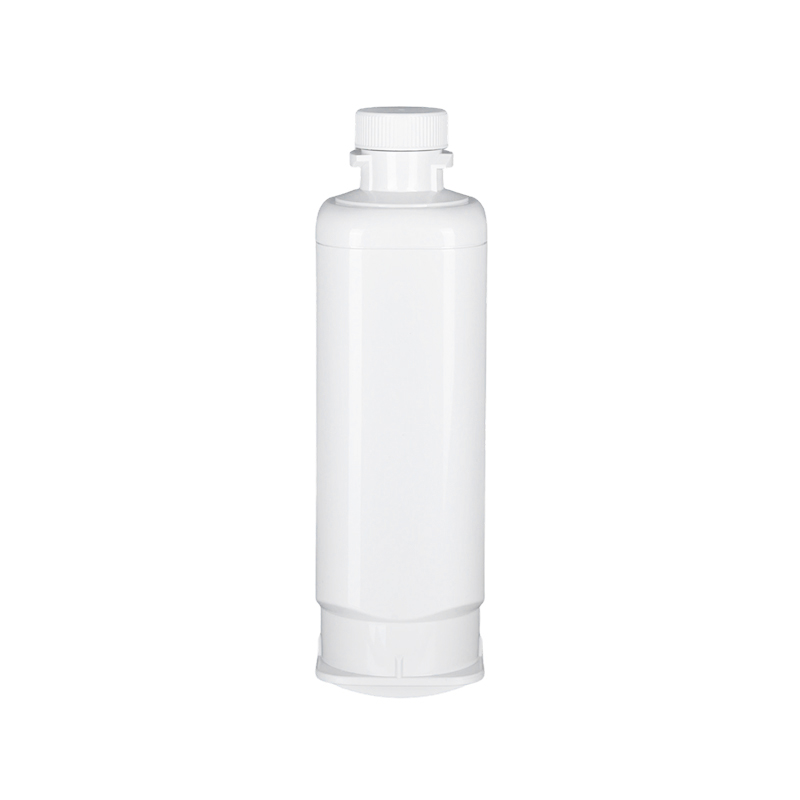
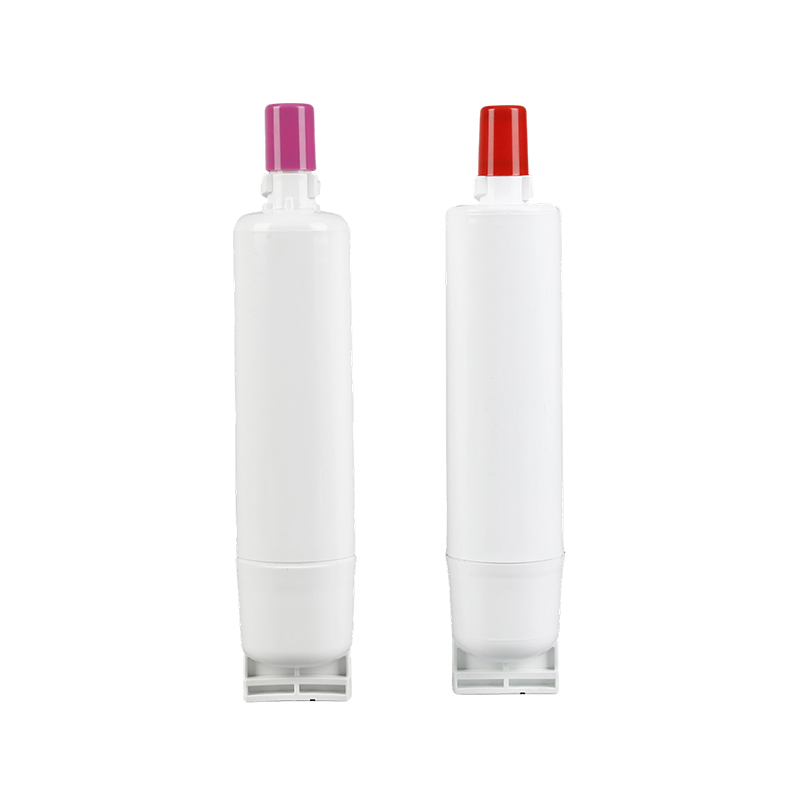
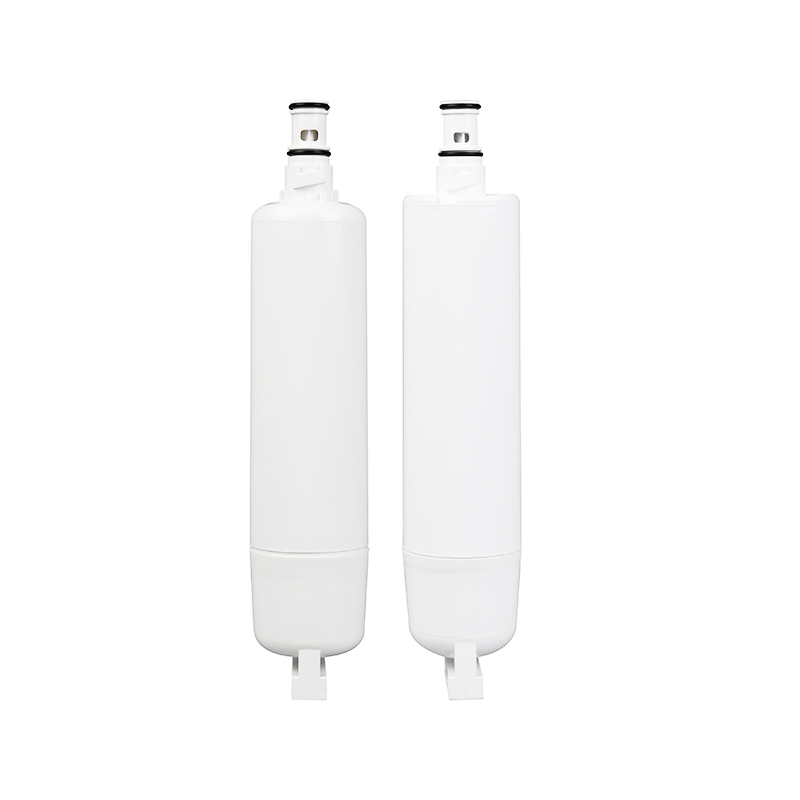
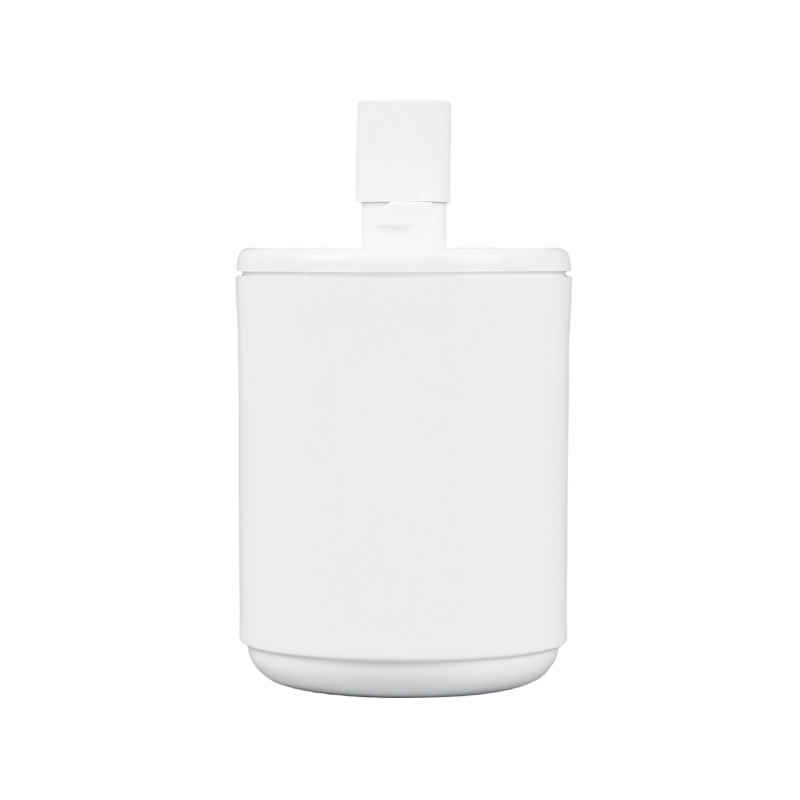
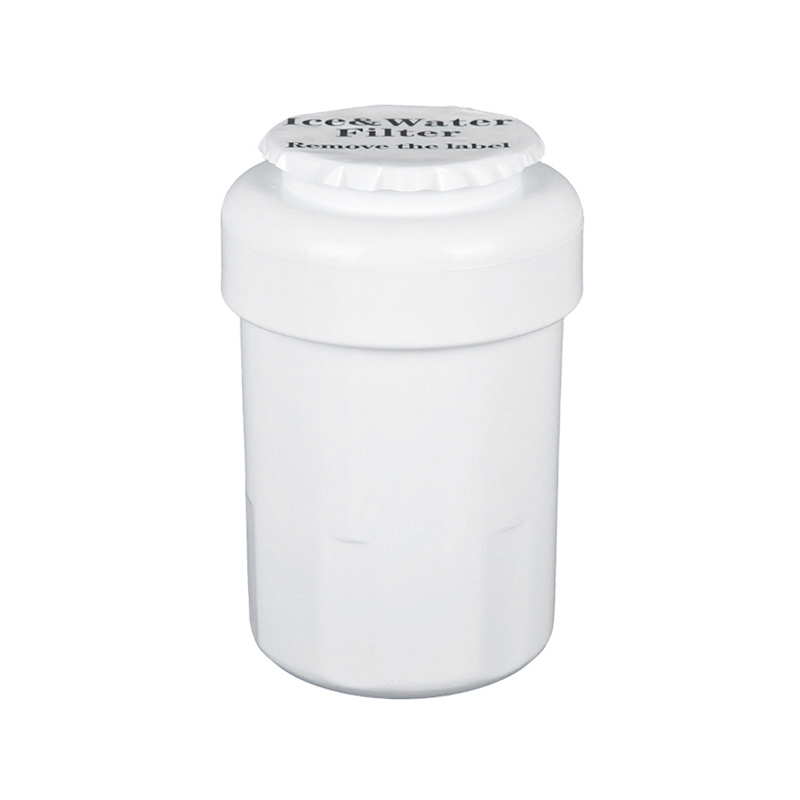
Twist-in and bayonet cartridge bodies with carbon block media, cross-referenced to DA29-00003G, DA29-00020B, DA29-10105J, 4396508, 4396841, MWF, LT500P and 836848 housings |
Through-door dispensers and ice makers in domestic refrigerators; aftermarket replacement and appliance service channels |
Cartridge envelope and interface, rated flow, service life, indicator or chip reset requirement |
| Composite filter element range |
10 in and 20 in big-fat groove cartridges, AP810 and AP817 series, multi-layer sediment and carbon construction |
Whole-house and point-of-entry pre-filtration where sediment and carbon duty share one body |
Housing size (10 in or 20 in, 2.5 in or 4.5 in), micron rating, media combination, allowable pressure drop |
| Water purification system range |
Under-sink, shower, countertop and whole-house purifier units; housings, brackets, taps, fittings and PPR pipework |
Drinking water at the kitchen point of use, bathroom supply and whole-home treatment projects |
Daily output, stage count, feed water chemistry, inlet pressure, port sizes and electrical interface |
| Pitcher water filters & coffee |
Gravity pitcher cartridges and coffee machine cartridges using carbon and ion exchange media |
Retail pitcher programmes and coffee machine OEM or aftermarket supply |
Machine or pitcher model, water hardness, cartridge life, seal geometry |
| Air filter & faucet filter |
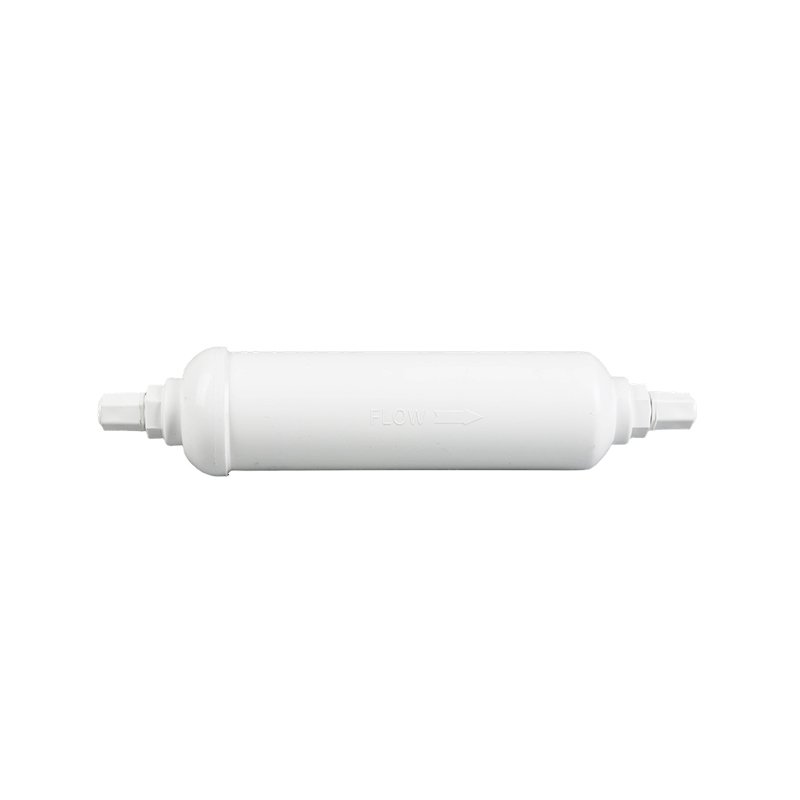
Faucet-mounted and inline faucet filters; air filtration cartridges and panels for purifier appliances |
Tap-point drinking water and air purification appliance lines |
Thread type, rated flow, media grade, housing finish |
| Pool spa filter |
Pleated polyester and cartridge-style elements for pool and spa circuits |
Commercial pools, hotel and villa spa installations, water park filtration loops |
Cartridge length and diameter, end cap design, pleat count, design flow |
| Other filters |
Dispenser elements RF-34, RF-80 and RF-104; CTO precision carbon element; dome ceramic element |
Water dispensers, foodservice equipment and domestic point-of-use replacement |
Dispenser model, element geometry, micron rating, media type |
| PPR pipes and accessories |
PPR pipe, elbows, tees, couplings and related fittings |
Purified water distribution from the treatment unit to the point of use |
Diameter, pressure class, standard reference |
Process and Application Fit
Media selection follows the feed water and the hydraulic conditions around the cartridge, not a fixed catalogue default. The conditions below are the ones that most often change the specification.
- Municipal supply: chlorine, taste, odour and fine sediment are handled by dense carbon block or granular carbon stages.
- Well and borehole feed: higher sediment and turbidity load usually calls for a sediment stage ahead of the carbon stage to protect media life.
- Hardness: whether a scale-control stage is added depends on the water analysis for the site.
- Refrigerator circuits: short contact time and low line pressure mean carbon block density, rated flow and pressure drop govern delivered performance.
- Pool and spa loops: pleat count and filtration area set the interval between cleaning cycles.
- Coffee and pitcher use: contact time and hardness influence taste and scale build-up in the appliance.
Critical Specifications We Confirm
- Cartridge overall length, diameter and end-cap geometry
- Connection type: bayonet or twist-lock, push-fit, quick connect, threaded port
- Housing reference: 10 in or 20 in, 2.5 in or 4.5 in, big-fat groove
- Media: carbon block, granular carbon, pleated polyester, ceramic, resin
- Micron rating and nominal filtration performance
- Rated flow and pressure drop at service flow
- Working pressure, burst requirement and temperature range
- O-ring and seal material in contact with water
- Service life expressed in litres or months
- Marking, label content and cartridge indicator requirement
Configuration Options and Line Integration
Custom work starts from the drawings and samples supplied with the enquiry. We produce new end-cap moulds for a cartridge envelope that is not yet in our range, blend media to the required rating, and print housings, labels and cartons in the distributor's own artwork.
- Private-label packaging, carton marking and shipping marks
- Custom cartridge length, end cap and connection for a specific appliance
- Housing, bracket, tap and fitting selection for purifier units
- Agreed inlet and outlet port sizes for retrofit into an existing line
- Electrical interface of any pump, indicator or valve supplied with a unit
Quality Control, Testing and Compliance
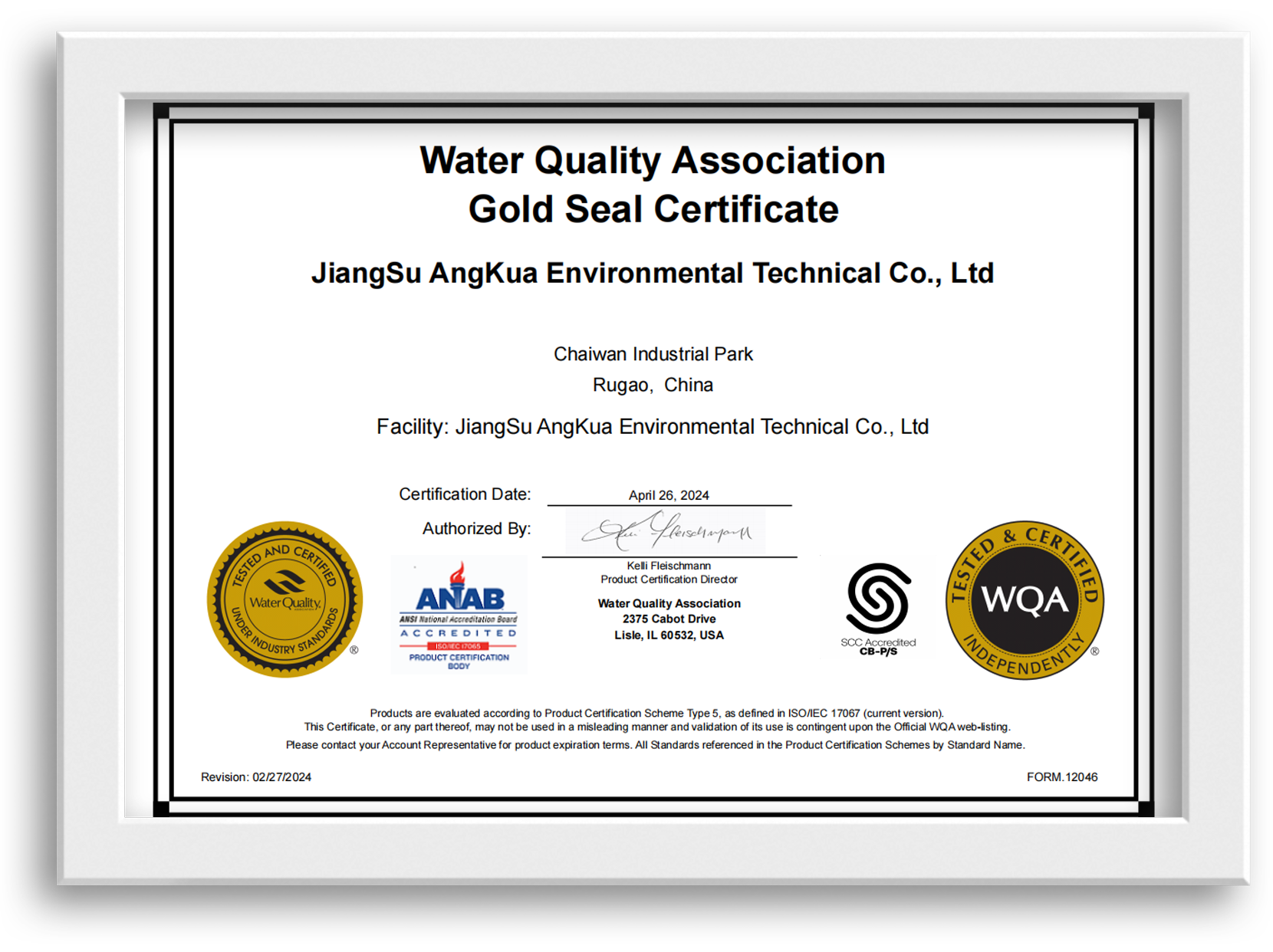
Our factory is certified to the ISO 9001 quality management and ISO 14001 environmental management systems, and products are tested in our environmental simulation laboratories before dispatch. Incoming media, welded or bonded joints, seal seats and finished cartridge dimensions are checked against the approved drawing.
- Pressure hold and burst checks on housings and cartridge bodies
- Flow and pressure drop measurement at the agreed working point
- Simulated water and operating conditions on production samples
- Water purification equipment certified to NSF/FDA, DIN 8077 and DIN 8078, and compliant with ISO 15874 and GB/T 18742
- Retained samples and test records tied to the production batch
Installation, Acceptance, Maintenance and Spare Parts
Cartridges and systems are supplied with installation notes covering flush-through, seating and leak inspection, and the pressure-hold checks expected before the unit is put into service. Acceptance criteria for a project — flow verification, pressure retention, visual and marking checks — are agreed on the order confirmation rather than left to site interpretation.
- Replacement intervals stated in litres or months for planned maintenance
- Spare cartridges, O-rings, housings and fittings available as separate line items
- Serviceability designed around tool-free cartridge removal where the housing allows it
- PPR pipework supplied to the same order for distribution runs
Information We Use to Configure Your Solution
- Appliance, dispenser or system model, plus an interface drawing or sample cartridge where available
- Feed water source and analysis: source type, hardness, chlorine, sediment or turbidity load
- Required flow rate, daily volume and available inlet pressure
- Micron rating, media preference and service life target
- Housing or unit reference, port sizes and connection standard
- Annual quantity, packaging format and private-label artwork
- Marking, certification and destination requirements for the shipment
Documentation, Packaging and Delivery Scope
Orders ship with the specification sheet, dimensional drawing and the test records agreed for that product, plus installation and replacement notes for the end user. Packaging is matched to the sales channel — individual poly bag, printed colour box, bulk carton or palletised export packing.
- Carton quantities and pallet configuration confirmed before production
- Mixed product families consolidated into one container where volumes allow
- Documents issued for customs clearance and incoming goods inspection
Frequently Asked Questions
Which water purification products can Angkua supply in one order?
Refrigerator water filters, composite filter elements, purifier systems, pitcher and coffee cartridges, faucet and air filters, pool and spa cartridges, dispenser elements and PPR pipework all come from our own production, so a mixed container can be built around one specification review.
Can you match the cartridge of a specific refrigerator model?
Yes. Send the appliance model or an original cartridge, and we confirm the envelope, connection interface, rated flow and service life, then produce a pre-production sample for fit testing before the order is released.
What do you need to quote a composite filter element?
Housing size, micron rating, media combination, rated flow, allowable pressure drop and annual quantity are the core inputs. If the element replaces an existing part, the outer dimensions and seal arrangement complete the picture.
Do you support private-label packaging and custom geometry?
We print housings, labels and cartons in the distributor's artwork and produce new end-cap moulds for cartridge envelopes that are not yet in our range. Tooling and sample timing are stated in the quotation.
How is quality verified before shipment?
Every batch passes dimensional checks, pressure hold or burst testing where applicable, and flow and pressure drop measurement, with retained samples and records held against the batch. Our factory operates under ISO 9001 and ISO 14001, and the equipment is certified to NSF/FDA, DIN 8077 and DIN 8078.
What is included in a purification system project delivery?
Purifier units ship with housings, brackets, fittings and the PPR pipework needed for the distribution run, together with installation notes. Acceptance checks for flow, pressure retention and marking are agreed on the order confirmation.


 Español
 عربى
عربى русский