
Content
Do pitcher water filters actually work?
Yes, within a defined scope. A pitcher water filter uses gravity to push water through activated carbon and ion exchange resin. Certified cartridges measurably reduce chlorine taste and odor, and many also reduce lead, copper, mercury, and certain organic compounds. A pitcher water filter does not remove dissolved salts, water hardness, or pathogens unless the cartridge carries a specific certification for that claim.
The result you get depends on three things: the certification behind the cartridge, how closely the claim matches your water, and whether the cartridge is replaced before it is exhausted.
Few household appliances create as much debate as the pitcher water filter. Some owners notice an immediate improvement in taste. Others see little difference and wonder whether the cartridge does anything at all. Both experiences can be true, because the pitcher water filter is a targeted tool and not a general purifier. When a supply has a strong chlorine smell, the improvement is obvious. When the supply is already low in chlorine and the concern is dissolved minerals, the cartridge has nothing relevant to act on, and the water seems unchanged.
Answering "Do pitcher water filters actually work?" therefore starts with a second question: work against what? The sections below connect each common concern to the mechanism, the certification, and the replacement habits that decide the outcome.
A pitcher water filter has no pump, no pressure vessel, and no electrical parts. Water sits in an upper reservoir and moves down through the cartridge under its own weight, typically with a pressure head of only a few kilopascals. This low driving force defines the design. The cartridge must be open enough to let water pass at a tolerable speed, but dense enough to give the media time to work.
Tap water is poured into the upper chamber, where it waits to enter the cartridge from the top and sides.
A mesh catches visible particles. Activated carbon then adsorbs chlorine and organic molecules.
Ion exchange beads capture dissolved metal ions and trade them for harmless ions.
A fine screen holds back carbon dust so the water in the lower chamber stays clear.
Because contact time is the main variable, a slower pitcher water filter often performs better than a faster one. This is not a defect. It is the physical trade-off that engineers manage when they choose carbon particle size, resin ratio, and cartridge geometry.
Carbon grains contain a labyrinth of microscopic pores. Chlorine and many organic compounds stick to the pore walls, and the water that exits carries less of them.
Resin beads hold exchangeable ions. When water contacts them, lead and copper ions swap onto the bead surface, and sodium or hydrogen ions are released in return.
Mesh and nonwoven layers catch sand, rust flakes, and carbon fines. They protect the media and keep the output visually clear.
Performance claims only make sense when they are tied to a specific contaminant and a test method. The two columns below set out the realistic range.
| Standard | Scope | Typical claim examples | Practical meaning |
|---|---|---|---|
| NSF/ANSI 42 | Aesthetic effects | Chlorine taste and odor, particulates | Better flavor and smell |
| NSF/ANSI 53 | Health effects | Lead, cysts, volatile organic compounds | Reduction of a named health-related substance |
| NSF/ANSI 401 | Emerging compounds | Selected herbicides, pesticides, medicines | Reduction of incidental trace compounds |
| NSF/ANSI 372 | Lead-free material | Lead content of wetted parts | The product itself does not add lead |
When you evaluate a pitcher water filter, read the performance data sheet and not just the logo. A certification mark that lists only chlorine does not support a lead claim, and a marketing line that says "removes impurities" has no measurable meaning.
A cartridge does not give constant performance until the last drop. Reduction stays high for most of the rated volume and then declines as adsorption sites fill and resin beads run out of exchange capacity. The chart below shows a representative engineering curve for a certified cartridge under standard test water. The figures are illustrative reference values. Actual results move with water chemistry, flow rate, and temperature.
The sharp drop beyond the rated line is the reason replacement guidance is tied to volume and time. A cartridge used at 120% of its rating no longer delivers its tested performance.
Owners often complain that a pitcher water filter is slow. Slow flow is a direct result of dense media, and dense media is what gives stable contaminant reduction. The comparison below lists typical time to filter one liter for different cartridge constructions.
Bar length is proportional to the upper end of the time range. Longer contact generally supports higher and more stable reduction values.
Two main cartridge families are in use. The listing below gives the practical differences so that capacity and replacement planning are easy to compare.
| Parameter | Standard cartridge | Extended-life cartridge |
|---|---|---|
| Rated volume | About 150 L (40 gal) | About 450 L (120 gal) |
| Replacement interval | About 2 months | About 6 months |
| Media structure | Granular carbon and resin | Compressed carbon block and resin |
| Filtering speed | About 3–5 min per liter | About 4–7 min per liter |
| Typical certifications | NSF/ANSI 42, sometimes 53 | NSF/ANSI 42, 53, 401 |
| Particle rating | Coarser, around 20–50 µm | Finer, around 1–5 µm |
| Water temperature | Cold only, up to 38°C | Cold only, up to 38°C |
Two limits apply at the same time: filtered volume and elapsed time. Whichever arrives first sets the date. Time matters because a wet cartridge is a damp organic environment, and microbial growth can start even when the volume limit is far away.
1–2 L per day
An extended-life cartridge reaches the time limit before the volume limit. Replace on the calendar.
3–4 L per day
Most standard cartridges reach their volume limit near the two-month mark.
6–8 L per day
Standard cartridges last only three to four weeks. Choose an extended-life design.
10+ L per day
Volume runs out fast. Use a larger pitcher and plan a replacement log.
Days until replacement = Rated cartridge volume (L) ÷ Daily filtered volume (L)
Example: a 150 L cartridge used at 4 L per day reaches its volume limit in about 37 days. A 450 L cartridge at the same rate would hit the volume limit at about 112 days, but the six-month time limit still applies if daily use is lower than that.
| Factor | How it affects the cartridge | What to do |
|---|---|---|
| High chlorine level | Consumes carbon capacity faster | Check the local water quality report and shorten the interval |
| Cloudy or sandy supply | Clogs the screen and slows flow | Let sediment settle or pre-strain before filling |
| Warm water | Releases adsorbed compounds back into the water | Use cold water only |
| High lead or copper levels | Uses resin capacity faster | Replace early and verify with a water test |
| Long idle periods | Wet media encourages microbial growth | Remove, dry, and replace before reuse |
Many pitchers include a timer or counter. These devices estimate and cannot measure water quality, so physical signs deserve equal weight.
When carbon sites are full, chlorine passes straight through. The water starts to smell like untreated tap water again.
Clogged pores raise resistance. Filtering that once took a few minutes may now take double the time or longer.
Carbon fines escaping suggest a damaged outlet screen or a poorly seated cartridge. Replace and re-seat it.
A slick surface inside the reservoir points to biofilm. Clean the pitcher thoroughly and fit a new cartridge.
Act on the reminder promptly. It is set conservatively and represents a point at which performance starts to decline.
Drinks made with filtered water are a sensitive test. A flat or chemical edge often appears before other signs do.
A pitcher water filter is a small system, and its output quality depends on habits as much as on the cartridge. The routine below takes only a few minutes a week.
Rinse the cartridge under cold running water for about 30 seconds, then soak it as the instructions state. Discard the first two or three pitchers of filtered water to flush fines and trapped air.
Press it into the reservoir socket until the seal engages. A gap lets unfiltered water leak through the side, which silently defeats the filter.
Hot water can release adsorbed compounds and may deform the housing or damage the resin beads.
Wash the lid, reservoir, and pitcher body with mild dish soap and a soft cloth. Rinse thoroughly and let parts air dry.
Filtered water has lost its residual chlorine, so it spoils faster than tap water. Keep it covered and cold, and finish it within one to two days.
The pitcher water filter is one of several point-of-use options. Each has a different balance of cost, installation effort, and treatment range.
| Type | Installation | Main strength | Main limit |
|---|---|---|---|
| Pitcher water filter | None, fill and pour | Portable, low cost, easy to start | Small volume, slow, frequent refill |
| Faucet-mounted filter | Threads onto the tap | Fast flow, continuous supply | Shorter contact time, limited fit |
| Under-sink carbon system | Plumbed under the sink | Large capacity, dedicated tap | Installation required |
| Reverse osmosis system | Plumbed with a drain line | Broad reduction, including dissolved solids | Water waste, higher complexity |
Local water chemistry is the single biggest influence on whether a pitcher water filter feels worthwhile. Use the guidance below as a starting point, then confirm with a local water quality report or a home test.
The cartridge gets most of the attention, yet the pitcher body also shapes daily experience. Material choice affects clarity, durability, weight, and compatibility with cleaning routines. Details such as lid geometry, spout shape, and handle balance decide whether the pitcher is pleasant to use or tiring to lift when full.
| Material | Clarity | Impact resistance | Weight | Care notes |
|---|---|---|---|---|
| Food-grade polypropylene (PP) | Translucent | High | Light | Resists staining, handwash preferred |
| Styrene acrylonitrile (SAN) | Crystal clear | Medium | Light | Avoid hot water and dishwashers |
| Copolyester | Crystal clear | High | Light | Durable, resists clouding |
| Borosilicate glass | Excellent | Low to medium | Heavy | Very easy to clean, careful handling |
We design, mold, and assemble pitcher water filter systems under one roof. Because tooling, media blending, and assembly are all handled in the same facility, specifications can be matched closely to the target use. The ranges below describe our standard platforms.
Consistent output comes from controlled steps. Each stage in our production line has a defined inspection point, and results are logged against the batch code on the finished product.
Carbon is tested for iodine number, moisture, and particle size distribution. Resin is checked for exchange capacity and bead uniformity. Resin pellets for the pitcher are verified for food-contact grade.
Pitcher bodies, lids, and cartridge housings are molded on controlled cycles. Wall thickness and dimensional checks are recorded at the start and during each run.
Carbon and resin are blended to a fixed ratio and filled or pressed into the cartridge cavity. Fill weight is verified on every shift.
Ultrasonic welding closes the cartridge shell, and seals are fitted to prevent water bypass at the socket.
Sample cartridges are tested for filtering time, particle release, and chlorine reduction. Selected lots go through extended-volume challenge runs.
Pitchers are checked for leaks, lid fit, and surface defects, then packed with a cartridge, instruction sheet, and batch marking.
| Test | Purpose | Typical condition |
|---|---|---|
| Rated volume challenge | Confirms reduction holds across the full capacity | Challenge water dosed at standard concentration |
| Filtering time | Verifies flow stays inside the design range | Measured per liter at set water level |
| Particle release | Checks carbon fines in the outlet water | Collected samples after initial flush |
| Material extraction | Confirms wetted parts do not add contaminants | Soak test with analysis of extract water |
| Drop and impact | Tests structural durability of pitcher and lid | Filled pitcher dropped from a set height |
| Dishwasher and wear check | Shows how finish and parts endure cleaning | Repeated cycles on sample units |
A pitcher water filter project often starts with a clear target: a certain look, a specific claim, or a particular capacity. Our engineering team works from drawings, reference samples, or a written performance brief, and moves through the stages in a fixed order.
Pitcher shape, lid mechanics, handle geometry, and color options are developed with renderings and printed prototypes before tooling begins.
Carbon grade, resin ratio, and block density are adjusted to favor taste, heavy metals, or longer cartridge life.
Retail cartons, printed manuals in multiple languages, and surface decoration on the pitcher can be produced in line with production.
The usual path runs from requirement review to sample build, then to performance testing and pilot production. Samples can be sent for handling and fit checks, so the feel of the pitcher, the ease of cartridge replacement, and real-world filtering times are confirmed before mass production starts.
Activated carbon adsorbs vapors from the air, which means a spare cartridge loses capacity if left unsealed near cleaning products, paint, or fuel. Keep spare cartridges in their original sealed bags, in a cool and dry place away from direct sunlight. Temperatures above 40°C and freezing conditions should be avoided because they can damage resin beads and cartridge seals. Under suitable storage conditions, an unopened cartridge typically retains its performance for two to three years. Once the bag is opened and the cartridge is wetted, the service period begins, so note the installation date on the cartridge or a household calendar.
Fact: it reduces named contaminants. Dissolved minerals and many other substances pass through unchanged.
Fact: performance falls after the rated volume, and a damp old cartridge can harbor microbes.
Fact: boiling does not remove lead or most chemical contaminants. It also concentrates some of them as water evaporates.
Fact: socket shape, seal size, and cartridge length differ by model, and a poor fit lets water bypass the media.
They do for specific tasks. A certified pitcher water filter reduces chlorine taste and odor, and many cartridges also reduce lead, copper, mercury, and certain organic compounds. The filter does not change dissolved salts or hardness, and an expired cartridge performs well below its rating.
Look for the standard number on the packaging and a performance data sheet that lists each contaminant and the reduction percentage. A logo without a list of claims does not describe what the cartridge was tested for.
Not in most cases. Fluoride is a dissolved ion that standard carbon and resin cartridges do not target. Only cartridges that state a certified fluoride claim should be relied on for this purpose.
Cartridges with a certified lead claim reduce lead significantly under test conditions. Check that the data sheet lists lead and the tested capacity, and replace the cartridge on schedule.
Loose carbon dust from manufacturing can appear in the first few pitchers. Flush the cartridge as directed. If particles continue, check that the cartridge is seated properly and replace it if the outlet screen is damaged.
No. Hot water can release adsorbed substances, damage resin beads, and deform the housing. Use cold tap water only.
Keep it covered in a refrigerator and use it within one to two days. The residual chlorine that protects tap water has been removed, so microbial growth can occur sooner.
Well water has unknown and variable composition. Test it first. A pitcher alone does not provide disinfection and is not a substitute for treatment when biological contamination is possible.
Share your target capacity, design reference, or performance requirement. Our engineers will recommend media options, prepare sample units, and provide test data for review.
Request samples and technical data
RF-81 refrigerator-specific water filter is specially designed for you who pursue high-quality life. It is compatible with Kenmore 46-9130 and many mainstream refrigerator models. It is easy to instal...
See Details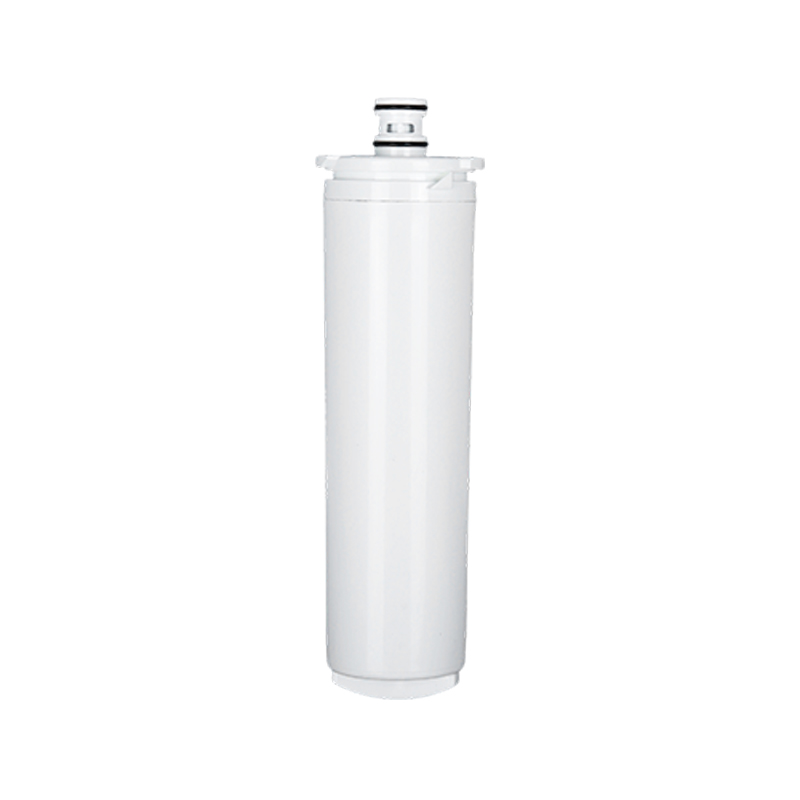
RF-61 refrigerator filter, as the guardian of healthy drinking water for the family, is specially designed for you who pursue high-quality life. It is compatible with SGF-B052 model refrigerator, ensu...
See Details
RF-52 refrigerator water filter is specially designed for the pursuit of high-quality drinking water life. This product adopts advanced multi-layer filtration technology to efficiently remove impuriti...
See Details
RF-91 refrigerator water filter, as a close companion for healthy drinking water in modern families, is specially designed for you who pursue high-quality life. It adopts multi-stage filtration techno...
See Details
RF-90 refrigerator water filter is specially designed for you who pursue high-quality drinking water life. It is compatible with DA29-0003G refrigerator model and is an ideal choice for your family's ...
See Details
RF-89 refrigerator water filter, as a must-have for modern family kitchens, is compatible with the 800P series refrigerator design. With its excellent water purification performance and convenient ins...
See Details
RF-86 refrigerator filter, as the guardian of your family's healthy drinking water, is designed to provide excellent water quality solutions for compatible LT1000P models. It uses advanced multi-layer...
See Details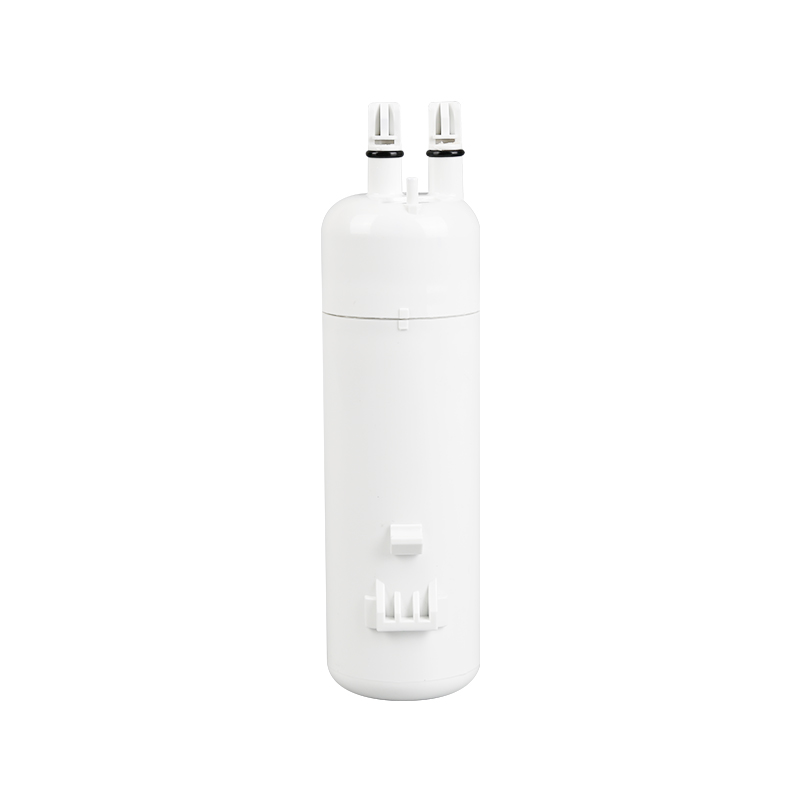
RF-27, as a water filter designed for high-end refrigerators, is compatible with refrigerator models such as WHIRLPOOL W10295370A and KENMORE 46-9930. With its excellent filtering performance and conv...
See Details
CONTACT us
*Your email is safe with us, we don't spam.

 The company's main products include
Contact Info
Phone: +86-13962755959 Tel: +86-513-87206118 E-mail: AK@chinnovel.com Add: 555 Yishou North Road, Chengbei Street, Nantong, Jiangsu

 Español
 عربى
 русский


